Translating Deceit Across Contexts: How Chinese public discourse reinterprets the concept of disinformation
By Yik Ching C., PhD Candidate at the University of Manchester
In recent years, “disinformation” has become a ubiquitous term in public debate. Governments warn against it, platforms claim to combat it, and researchers seek to define and measure it. Yet the meaning of “disinformation” is not as stable or universal as it often appears. Using China as my example, I argue here that when the concept of “disinformation” travels across languages and contexts, it is reinterpreted through existing local frameworks for understanding deceit rather than simply translated into an equivalent term. As a result, the concept acquires different meanings and assumptions about truth, deception and legitimacy.
At first glance, the meaning of disinformation appears straightforward: false or misleading information that is spread deliberately to deceive and cause harm. However, there are differences between disinformation as a concept, disinformation as a set of communicative practices and terms around disinformation. As such, this conceptual clarity becomes confused and inconsistent when the term travels across languages and contexts. What happens when the term “disinformation” is translated? How does translation reshape the concept and what do these shifts reveal?
These questions are central to my PhD research, which examines how the term “disinformation” is translated into Chinese and how Chinese public discourse draws on existing local concepts of political deception that only partially overlap with the English term. By comparing these conceptual frameworks, I explore how meanings associated with “disinformation” are re-interpreted and contested across linguistic and cultural contexts. Importantly, this comparison is not limited to cases where the English word “disinformation” is explicitly translated. It also examines how existing Chinese concepts of political deception intersect with, diverge from and reshape the meanings associated with the English concept. This raises a broader methodological question. If different linguistic and cultural traditions conceptualise political deception in different ways, then researchers cannot assume that “disinformation” functions as a universal analytical category. Instead, we must examine how locally embedded concepts shape what counts as deception in different communicative contexts. Accordingly, rather than “disinformation,” I adopt the broader concept of “discourses about political deception,” which refer to secondary, reflexive discourses through which foreign accusations against China are interpreted, resisted and reframed across different linguistic and political contexts without assuming conceptual equivalence. These discourses include both how China makes disinformation allegations and how China defends itself or its allies against them.
The discussion that follows in this blog post illustrates this in two complementary ways. First, it examines how Chinese public discourse draws on existing concepts embedded within local epistemic, cultural and political frameworks to interpret accusations of political deception. Second, it shows how translation choices reflect broader differences in how politically contested events are understood. In these cross-linguistic encounters, translation becomes more than a linguistic transfer of meaning. It is also a political and epistemic act that embeds narratives outside China within locally meaningful storylines, shaping how accusations of political deception, claims to epistemic authority and competing narratives are constructed, stabilised and contested.
In English-language research, “disinformation” is typically defined through three core elements: falsity, intention and harm. Whether in policy reports or academic literature, the term is often treated as a stable analytical category. However, this stability is more fragile than it appears. Even within English, the boundaries between “disinformation,” “misinformation,” “propaganda” and “fake news” are frequently blurred. For example, in the U.S., “misinformation” is frequently used interchangeably with “disinformation”. The problem becomes more pronounced across languages. Some languages do not have a direct equivalent for “disinformation,” and where translations exist, they rarely map exactly onto the concept as it is understood in English.
The Chinese case illustrates this particularly clearly. When English-language texts use the word “disinformation,” there is no single, stable Mandarin equivalent that translators consistently adopt. Instead, a range of Mandarin terms are employed differently depending on context to translate this concept, including “虚假信息” (xū jiǎ xìn xī, “false information”), “谣言” (yáo yán, “rumour”), “谎言” (huǎng yán, “lie”), “抹黑” (mǒ hēi, “smear/discredit”) and “甩锅” (shuǎi guō, “scapegoating/shift blame”). For example, Chinese scholarship has used “虚假信息” (“false information”) to analyse disinformation, while other studies have applied “谣言” (“rumour”) or “欺骗性信息” (“deceptive information”). Meanwhile, in a Chinese official post on Weibo responding to foreign accusations of China’s and Russia’s disinformation campaigns, the concept is reframed through expressions such as “抹黑” (“smear/discredit”), which foreground perceived political motivation rather than informational falsity. These terms reflect indigenous Chinese concepts of political deception, with their own meanings and histories rather than translations of the English term. They represent various aspects of what in English is termed “disinformation,” but none fully overlaps with it.
They also introduce meanings and associations that are absent from the English term. Therefore, although these terms are not translations of the English term, they provide the conceptual resources through which it is often understood. Specifically, “谎言” (“lie”) usually denotes an intentionally fabricated falsehood and often carries stronger moral and political connotations than the broader English word “lie”; “谣言” (“rumour”) refers to unverified information circulating among the public and, particularly in Chinese official discourse, is commonly associated with social disruption and threats to stability; “虚假信息” (“false information”) refers to a type of lie spread via social media or political manipulation causing harm to society; “抹黑” (“smear/discredit”) is a Chinese Internet slang and refers to the act of deliberately damaging someone’s or a country’s reputation or image through negative framing, accusations or misleading narratives; “甩锅” (“scapegoating/shift blame”) is another Chinese Internet slang meaning to shift responsibility or blame onto others to avoid criticism or accountability. In the context of discussions of foreign accusations levelled at China, some Chinese actors use this term to describe such accusations as false and politically motivated attempts to deflect blame onto China.

Figure 1. Screenshot from Year, Hare, Affair, Bilibili, 2015.
Year, Hare, Affair is a Chinese webcomic and media franchise. The comic uses anthropomorphic animals as an allegory for nations and sovereign states to represent 20th and 21st century political, military and diplomatic events. This screenshot represents the early Cold War context in which the bald eagle (which represents the U.S.) and the brown bear (which represents Soviet Union/Russia) were accusing that the rabbit (which represents China) was unfriendly in front of other animals (other animals), implying that China was largely excluded and isolated by other major powers.

Figure 2. Screenshot from Year, Hare, Affair, Bilibili, 2015.
In this screenshot, the rabbit (China) described the bald eagle (the U.S.) and the brown bear (Soviet Union at that time) as “造谣” (“fabricating and spreading rumours”). It illustrates how Chinese public discourse relies on existing Mandarin categories of political deception discussed above to make sense of foreign accusations, making use of the term “disinformation” in relation to such discourse problematic.
This multiplicity is not simply a linguistic inconvenience. It reveals that discussions of deceit in Chinese emerge from distinct linguistic, cultural and historical contexts that frame political deception differently from dominant Anglophone conceptions of “disinformation”. For example, during the Russia-Ukraine War, some Chinese netizens described Western reporting on the Bucha Massacre as “虚假信息” (“false information”) or manipulative narrative strategies designed to demonise Russia and reinforce Western geopolitical interests. By contrast, discussions surrounding the COVID-19 lab-leak theory in Chinese discourse often focused less on categorising the allegations than on interpreting their perceived purpose, rebutting them as attempts to “甩锅” (“shift blame”) onto China.
One key difference lies in what is being evaluated. In much Anglophone discourse, disinformation is primarily treated as a problem of content. By contrast, Chinese dismissals of foreign anti-China accusations as deception often place greater emphasis on intention and context than on content. Rather than asking whether a claim is factually accurate, actors frequently interpret foreign accusations against China, such as the COVID-19 lab-leak theory or allegations surrounding China’s relationship with Russia during the Ukraine war, in terms of the intentions behind them. When such accusations are perceived as politically motivated attempts to damage China’s reputation or advance geopolitical interests, they are often framed as acts of political deception. In other words, perceived hostile intention becomes a key criterion for judging communication as deceptive. This shift has important implications. The object of concern is no longer simply misleading information, but the act of accusation itself. Claims labelled as “disinformation” in the Anglophone world may be reframed in China as evidence of bias, prejudice or geopolitical manipulation to discredit China.
These different ways of understanding political deception are reflected not only in public debate but also in concrete acts of translation. Even when the word “disinformation” itself is not being translated, translators’ lexical choices can reveal underlying assumptions about responsibility, legitimacy and political intent. For example, while many Western media outlets referred to the killings in Bucha as the “Bucha Massacre,” some Chinese discussions rendered it more neutrally as “布查事件” (bù chá shì jiàn, “Bucha Event”). By softening the implication of intentional atrocity carried by the word “massacre,” the translation shifts attention away from assumptions of intentional atrocity towards uncertainty, competing interpretations or geopolitical context. A similar dynamic can be observed in the interpretation of terms such as “Chinese virus” or “Wuhan virus,” which were frequently understood in Chinese discourse as politically motivated attempts to stigmatise China internationally. Rather than being evaluated primarily in terms of their factual accuracy, they were understood as evidence of hostile intent and therefore as forms of political deception.
These examples show that translation is not just a matter of replacing words across languages. It is useful to distinguish between translation as the movement of texts across languages and comparison as an analytical tool for examining different conceptual systems. Both are important here. Some of the examples discussed involve explicit translations, while others reveal how existing Chinese concepts shape the interpretation of political deception more broadly. Translation choices can reflect and reinforce different understandings of political deception, responsibility and legitimacy, thus shaping the interpretive framework through which political events are understood.
These differences are not casual but reflect deeper cultural and historical traditions. Whereas much Anglophone scholarship on disinformation often begins by asking whether information is false or misleading, the classical Chinese concept of “捭阖” (bǎi hé) offers a contrasting way of thinking about political communication. It understands political communication as a strategic practice oriented towards managing relationships, influencing audiences and pursuing political objectives rather than conveying objective truth. Although the concept itself is not commonly invoked in contemporary public discourse, its emphasis embedded in its understanding of political communication continues to inform broader Chinese understandings of political deception. Its complementary principles of “捭” (bǎi, speaking with rhetoric to meet the audience’s desires) and “阖” (hé, planning silently aligning with the speaker’s own intentions) (see Figure 3 and Figure 4) illustrate an approach in which communication is evaluated not only in terms of factual accuracy, but also according to communicative intention, strategic positioning and political consequences. This historical perspective helps explain why contemporary Chinese public discourse may place greater emphasis on perceived hostile intent than on factual content when identifying acts of political deception.

Figure 3. “捭”(bǎi)

Figure 4. “阖”(hé)
This does not mean that truth is irrelevant. Instead, it suggests that truth is understood relationally and embedded in political, social and moral considerations. As a result, misleading communication is often evaluated not only in terms of factual correctness but also related to its perceived impact on collective interests, such as national stability or reputation. Therefore, when foreign accusations against China circulate in Chinese discourse, they are often reframed and interpreted through existing Chinese frameworks for understanding political deception analysed above rather than being conceptualised as a distinct category of “disinformation”.
Recognising the conceptual and translational variability of political deception across languages has important implications for both research and policy.
First, it challenges the assumption that “disinformation” is a universal concept with a stable function across cultures and political contexts. Efforts to track or counter disinformation inevitably rely on definitions developed in specific cultural, historical and political contexts. When these are applied to different societies without adjustment, they can obscure locally embedded understandings of political deception.
Second, it highlights the importance of language in shaping political reality. Specifically, language not only describes phenomena but also participates in constructing the concepts underlying them. Differences in the existing concepts of political deception across cultures and languages affect how local translation practitioners use and interpret these concepts, how their audiences respond, but also how we as observers translate between them. This means we must avoid assuming conceptual equivalence when comparing political discourse across cultures.
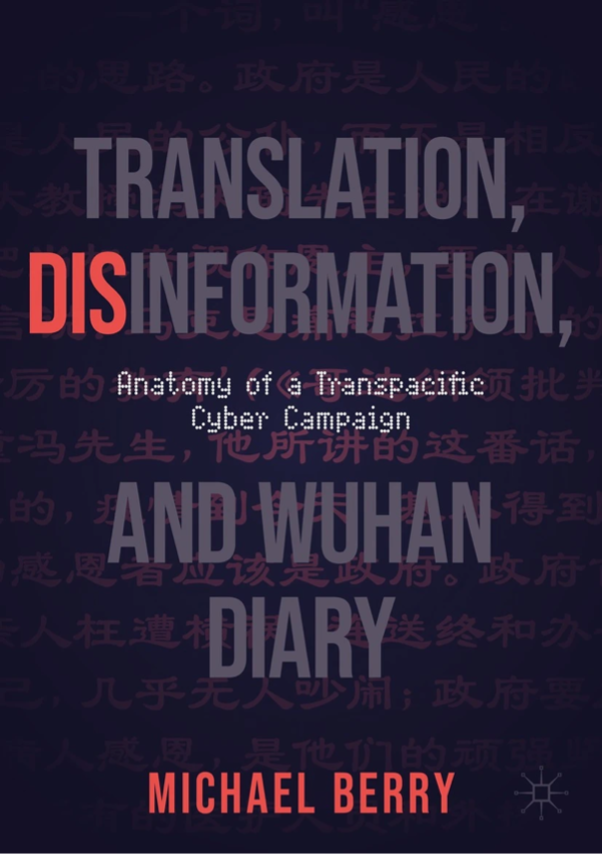
Figure 5. Translation as a hidden actor in disinformation.
Finally, it calls for greater attention to cross-cultural analysis in disinformation studies. Rather than treating non-English contexts just as additional sites where disinformation occurs, researchers need to examine how different societies conceptualise political deception and how those conceptual differences shape communication, translation and public debate.
The examples discussed in this article remind us that the global circulation of concepts does not guarantee the global circulation of meanings. Whether through the translation of specific terms, the interpretation of politically sensitive events or the use of local concepts such as “虚假信息” (“false information”), “谣言” (“rumour”) and “抹黑” (“smear/discredit”), meanings are continually negotiated and reshaped. Translation thus plays an active role in shaping different understandings of truth, deception and legitimacy. Recognising these processes is essential to understand how political deception is communicated, interpreted and contested across cultural contexts.