Newsletter #6

This is the sixth issue of a newsletter produced by the AHRC-funded research project (Mis)Translating Deceit: Disinformation as a Translingual, Discursive Dynamic.
The project brings together researchers from the University of Manchester, Chatham House, Loughborough University, and the University of Leeds in an effort to bring an important new dimension to a global challenge of increasing concern.
This newsletter covers events, engagements, and publications from January 2026 to June 2026.
Project Team Update
Recently, Maxim Alyukov has accepted a permanent position as Lecturer in International Relations at the School of International Relations, University of St Andrews, where he will take up his post in September 2026.
Dr Maksim Markelov - a recent Manchester University PhD graduate and a (Mis)translating Deceit associate project member - has been awarded the prestigious and highly competitive University of Manchester Hallsworth Research Fellowship following a stringent selection and interview process. Maksim will take up the fellowship later in the year to undertake his project, titled “Countering Hostile Foreign Information Manipulation: From Content Moderation to Holistic Digital Governance,” under the mentorship of Professor Vera Tolz-Zilitinkevic. The project will examine how democratic societies can develop more comprehensive responses to foreign information manipulation by moving beyond content moderation in general and fact-checking in particular, and by addressing the wider themes of the complex, evolving relationship between platform governance, information manipulation, and democratic resilience in the digital realm.
Academic Publications
Alexandr Voronovici, ‘The Ambiguities of the Separatist Symbolic “(Pro-)Russianness”: The Case of the Unrecognised Donetsk People’s Republic’, Plural. History. Culture. Society 14, no. 2 (2025): 113-124.
This article examines the evolution and internal ambiguities of separatist symbolic ‘(pro-)Russianness’ in the unrecognised Donetsk People’s Republic (DNR) between 2014 and 2022. Focusing on symbolic politics, historical narratives, and language policy, it shows that the separatist discourse was neither linear nor ideologically coherent. In the aftermath of the failure of the Novorossiia project and the signing of the Minsk II agreement, DNR leaders temporarily emphasised Donbas regionalism, multiethnicity, and interethnic tolerance, presenting their polity as a multiethnic alternative to Ukrainian ethnic nationalism that separatists attributed to the Ukrainian leadership in Kyiv. This orientation was reflected in language policies, historical references to the Donetsk–Kryvyi Rih Soviet Republic, and educational materials. However, these narratives coexisted with competing Russian nationalist interpretations and gradually gave way to a more explicitly russkii-centric discourse. The adoption of the ‘Russian Donbas’ doctrine in 2021marked a decisive symbolic shift toward ethnic nationalism and irredentism. The article argues that these shifts reflect changing political contexts, strategic calculations, and the instrumental use of history in separatist state- and nation-building.
Link to the online open-access article: https://doi.org/10.37710/plural.v13i2_5
Stephen Hutchings, ‘Deep State Conspiracism and/as Disinformation: A Journey to the Heart of Democracy’s Truth Crisis’, International Journal of Communication, 20 (2026), 23-23.
This article explores deep state (DS) conspiracism’s ambiguous relationship with disinformation. Applying cross-cultural discourse analysis and genealogical methods to the divergent valorizations of DS narratives, the study shows how they portray it variously as disinformation, misinformation, sinister actuality, mythological truth, and conceptual tool, arguing this inconsistency impels us to relocate disinformation from a universalist realm of false content to a contingent world of reciprocal political meaning making and outlining a more epistemologically robust approach to the truth-democracy relationship.
Link to the online open-access article: https://ijoc.org/index.php/ijoc/article/view/26038
Maxim Alyukov and Margarita Zavadskaya, ‘“It’s Not That Simple, We Don’t Know the Whole Truth”: The Effects of Pseudo Fact Checking in Wartime Russia’, Perspectives on Politics (2026).
While authoritarian governments increasingly use pseudo fact checking to discredit rivals, research on this strategy in autocracies remains scarce. This study addresses this gap with a preregistered online experiment conducted in authoritarian Russia during the invasion of Ukraine. Although isolating citizens from alternative information in saturated media environments is impossible, we argue that propaganda can counter this threat through pseudo fact checking. The experiment shows that pseudo fact checking undermines the credibility of alternative information and creates uncertainty that is particularly pronounced among regime critics, preventing them from blaming the regime for its policies. Repressive autocracies incentivize avoiding a critical stance. While this interpretation remains tentative, we argue that pseudo fact checking may, by inducing uncertainty, provide regime critics with additional justifications to avoid judgment. These findings highlight how authoritarian propaganda adapts to new media environments and have important policy implications, highlighting the potentially adverse effects of counterpropaganda campaigns.
Link to the Online First Open Access version: https://doi.org/10.1017/S153759272610454X
Maxim Alyukov, ‘Whose “Fakes”? Disinformation Awareness and Motivated Reasoning in Wartime Russia’, SSRN Preprint (2025).
Accusations of disinformation now play a central role in contemporary political contestation. Beyond efforts to counter falsehoods, disinformation labels are increasingly mobilised as strategic tools to delegitimise adversaries and police the boundaries of credible information. This proliferation raises concerns about second order disinformation effects, namely the political consequences of heightened disinformation awareness itself, yet systematic evidence on these dynamics remains limited. This study addresses this gap using data from the 2024 Panel Study of Russian Public Opinion and Attitudes (N = 3,513). Following the invasion of Ukraine, Russia's information environment became densely saturated with competing claims about truth, deception, and manipulation. The Kremlin institutionalised disinformation accusations as a core propaganda instrument, while foreign governments and independent actors advanced parallel counter narratives. I argue that under such conditions, widespread disinformation awareness may reinforce autocratic communication by facilitating motivated reasoning. Using top-of-mind association method and an embedded experiment, I examine how associations with the concept of disinformation vary across partisan groups and how exposure to political narratives shapes these associations. The results suggest that disinformation awareness facilitates motivated reasoning. Politically engaged individuals with strong partisanship are more likely to label outgroup sources as disinformation, and exposure to political narratives amplifies this tendency. These effects are asymmetric. Political narratives equip regime supporters with cognitive resources to dismiss counter attitudinal information as disinformation, while the effect is weaker among regime critics. This asymmetry likely reflects the regime's monopolisation of the disinformation label, which lacks salience in oppositional media. These findings advance understanding of authoritarian propaganda and inform counter disinformation strategies.
Link: https://dx.doi.org/10.2139/ssrn.5946974
Vera Tolz and Alexandr Voronovici, 2026, ‘From Moscow to Cologne and across the Atlantic: Newspaper science and the global origins of Soviet mass communication,’ Journal of Global History.
This article situates early Soviet studies of the press, a specific academic field called gazetovedenie, within the global history of mass communication research. While scholarship often portrays Soviet media theory as entirely subordinate to agitational practice, this situation only became established by 1930, when well-known Soviet orthodoxies on the nature and role of propaganda fully solidified. In the 1920s, Soviet press scholars actively engaged with contemporary global debates about the press’s role in mass society, how propaganda functioned, and why it often failed. Far from working in isolation, they drew upon thinkers such as Karl Bücher, Grant Hyde, and Walter Lippmann, while developing distinctive approaches, including applying Formalist methods to media texts, that resonated internationally. Viewing this intellectual activity as part of a global exchange redefines the origins of propaganda studies, not as a Cold War divide.
Link to the Online First Open Access version: https://doi.org/10.1017/S1740022826100564
Maxim Alyukov and Kristian Lundby Gjerde, ‘Faking the Fact-checker: Authoritarian Propaganda and Genre Mimicry in Wartime Russia’, SSRN Preprint (2026).
Authoritarian governments increasingly adopt the aesthetics of fact-checking to legitimise official narratives. This paper examines War on Fakes, a network of Kremlin-affiliated Telegram channels debunking information critical of Putin's regime. Combining topic modelling, qualitative coding, and longitudinal analysis of language and citation patterns, we examine how WoF constructs the concept of disinformation, and how its language evolved over the war. We argue that pro-regime fact-checking constitutes a new propaganda strategy adapted to a saturated media environment, blending (1) the logic of propaganda, (2) the elements of fact-checking, and (3) the theory of powerful media effects. WoF primarily debunks messages concerning social stability, moral conduct of the war, and military performance, revealing core regime sensitivities. We also find that over time, verification-related vocabulary declined as delegitimisation language overtook it, suggesting that the fact-checking facade served primarily as an audience-building strategy. The study contributes to understanding how autocrats repurpose journalistic authority in contemporary information environments.
Link: https://ssrn.com/abstract=6996322
Award and Recognition
Maxim Alyukov has received the Outstanding Early Career Paper Award from the Political Communication Research Section of the International Association for Media and Communication Research (IAMCR) for his paper, “Whose ‘Fakes’? Disinformation Awareness and Motivated Reasoning in Wartime Russia.” The paper is available as a preprint here: https://dx.doi.org/10.2139/ssrn.5946974.
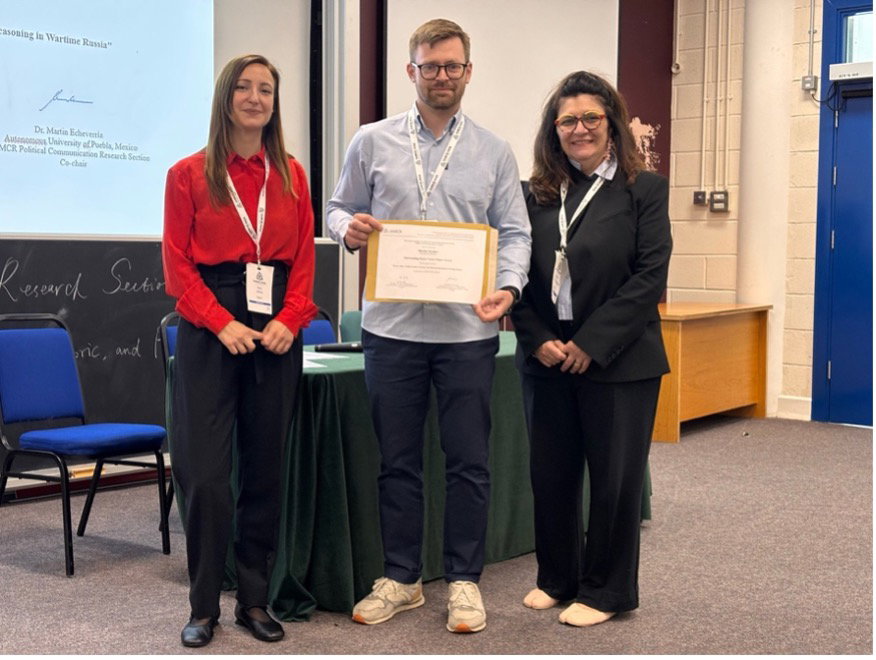
Maxim Alyukov receiving the Outstanding Early Career Paper Award from the Political Communication Research Section of the International Association for Media and Communication Research (IAMCR). Photo Credit: Amélia Aben Athar Olinto Ramos
New Blogs
Nicolas Hénin’s blog analyses the rise of the zero-click internet, and its implications on an increasingly changing online information ecosystem.
Hannah Gorlizki and Vera Tolz’s blog explores how Soviet wartime propaganda deployed visual and textual strategies to undermine trust in Nazi mass communication.
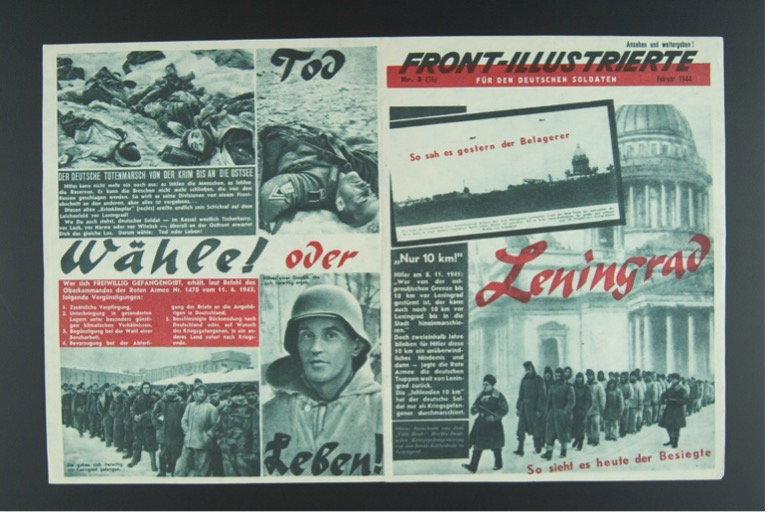
Cover image from Hannah Gorlizki and Vera Tolz’s blog on the relationship between Soviet wartime propaganda and trust in Nazi mass communication.
Olga K. Nanova’s blog examines how Bulgaria's Share4Pay platform monetised and amplified disinformation through a network of fake news websites.
Nicolas Hénin’s blog assesses how social media can better serve democracy by examining four key principles.
Latest Events
- 29th January: On 29 January 2026, Vera Tolz gave a lecture titled ‘Echoes of Deceit: Media, Health Crises and the Disinformation Lifecycle’ at the Department of International Relations, Central European University, Vienna. For further information, please visit the event page on the website here - https://www.mis-translating-deceit.com/research-events/vera-tolz-gave-a-lecture-at-the-department-of-international-relations-central-european-university-vienna.
- 21st April: Members of the (Mis)Translating Deceit project and its affiliates presented papers at the annual conference of the British Association for Slavonic and East European Studies (BASEES), held in Birmingham on 10-12 April 2026. For further information, please visit the event page on the website here - https://www.mis-translating-deceit.com/research-events/project-team-at-the-basees-annual-conference-10-12-april-2026.
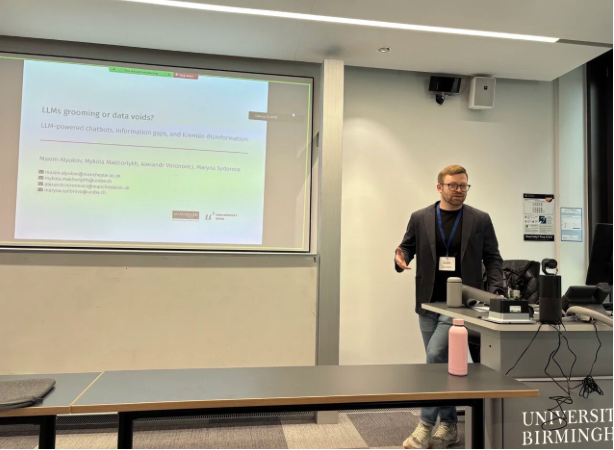
Maxim Alyukov presenting his panel at BASEES. Photo Credit: Florence Ertel
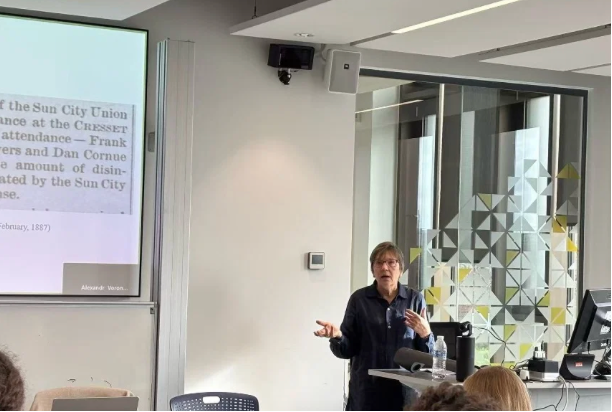
Vera Tolz presenting her panel at BASEES. Photo Credit: Yiqing Chen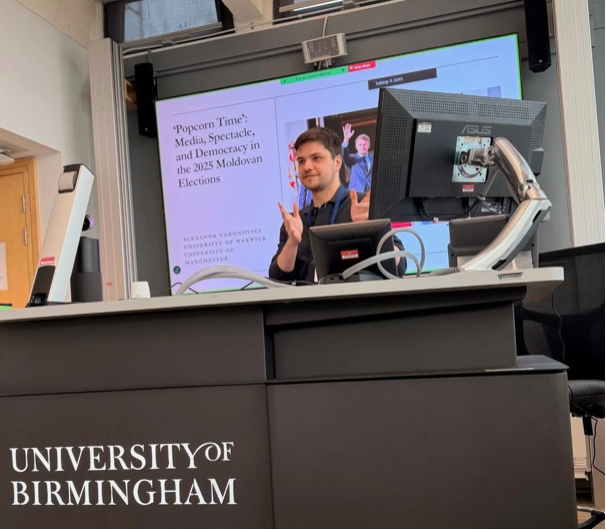
Alexandr Voronovici presenting his panel at BASEES. Photo Credit: Catalina Catana and Sorcha Scarff
- 21st April: On 13 April 2026, the team of the (Mis)Translating Deceit project hosted a seminar featuring Professor Paul Goode (McMillan Chair of Russian Studies, Carleton University) and Professor Florian Toepfl (Chair of Political Communication, University of Passau), two leading specialists on Russian propaganda and media, who presented papers emerging from their current research projects. For further information, please visit the event page on the website here - https://www.mis-translating-deceit.com/research-events/russian-propaganda-perspectives-from-two-leading-experts-in-the-field.
- 9th June: On 9 June 2026, Sabina Mihelj gave an invited talk at the Institute for Russian and Eurasian Studies, University of Uppsala, Sweden. The talk focused on media, trust and disinformation and was based partly on Sabina’s research an audience engagement with disinformation.
- 15th June: On 12 June 2026, Vera Tolz presented a paper, "Viral" before the Internet: Home-Grown and Foreign AIDS Disinformation in the Late Cold War Western Anglophone Media, at the international workshop HIV/AIDS and the Boundaries of Europeanness (University of Manchester). For further information, please visit the event page on the website here - https://www.mis-translating-deceit.com/research-events/vera-tolz-presented-a-paper-at-the-international-workshop-hiv-aids-and-the-boundaries-of-europeanness.
- 8-9th July: On 8-9 July 2026, Sabina Mihelj participated in a workshop on strategies of democratic resistance to the rise of illiberalism, held at the Institute for Research on Far-Right Extremism (IREX) at the University of Tübingen, Germany. Sabina’s contribution, co-delivered with Václav Štětka (European new School of Digital Studies) was based on the book on The Illiberal Public Sphere (2024) and also drew on insights from her ongoing research on audience engagement with disinformation. The talk reflected on how the actors and strategies of democratic resistance in the media sphere change as the influence of illiberal politics spreads.
Public and Policy Engagement
Our project participants have contributed to public discussions by making appearances in media and policy circles.
Stephen Hutchings was quoted in The Kyiv Independent on Russian propaganda in the Global South.
Our project members’ contributions are incorporated into the latest House of Commons Foreign Affairs Committee Report, Disinformation diplomacy: How malign actors are seeking to undermine democracy.
Stephen Hutchings was invited to provide comments on Vladimir Putin’s apparent limp during his recent visit to China for the Metro newspaper.
Maxim Alyukov has joined Good Authority as a 2026–2027 Good Authority Fellow. Good Authority is the successor to The Washington Post’s Monkey Cage and brings political science research to a broader audience. Over the next 12 months, he will write for Good Authority on authoritarian politics, propaganda, disinformation, and public opinion.
Affiliated Projects Updates
Members of the (Mis)Translating Deceit team play key roles in two other major research initiatives on mass and political communication, including disinformation. The synergy provided by the interplay of (Mis)Translating Deceit project and the outlined initiatives provides the framework for further expansion of the project network and of the spectrum of the research problems tackled by the team.
UKRI Network Plus 'Shifting Global Polarities: Russia, China, and Eurasia in Transitions'
This research programme, led by the University of Birmingham and involving the Universities of Manchester, Glasgow, and Oxford, brings together over 30 academics, policymakers, and artists from the UK and overseas. It seeks to understand and address the new challenges facing the region in the 21st century.
Stephen Hutchings serves as a Network Mentor to three projects sponsored by the Network.
Vera Tolz acts as a Network Mentor to two projects and a fellowship sponsored by the Network.
To find out more about the Network and its projects, please follow the link here: https://www.mis-translating-deceit.com/affiliated-projects/polarities.
Recent Update:
The Network hosted the event “Chasing the ‘World Majority’: Russia’s Information, Cultural, and Religious Influence in the ‘Global South’,” bringing together researchers to discuss Russia’s engagement with countries across the Global South and its implications for international politics and strategic communication.
Ahead of the event, the DECRIPT research programme at INALCO (Paris) launched the inaugural TETRIS methodology seminar series. The first seminar focused on methodological approaches to investigating the reception of Russian strategic narratives in countries of the Global South, providing a forum for multidisciplinary discussion and the exchange of best practices in narrative research.
Project partners are also completing the analysis for the first research article arising from the project. A blog post presenting the project’s initial findings is currently being prepared and is expected later this summer.
Publication Update:
Precious Chatterje-Doody and Maxime Audinet (2025). RT India: how the Kremlin is spreading its 'west vs the rest' narrative to a global audience. The Conversation https://doi.org/10.64628/AB.76cjh7k69
Precious Chatterje-Doody and Maxime Audinet have published their article on the launch of RT India and its role in pushing the Kremlin's "west v the rest" narrative. You can read it here.
Resources
Bibliography
We have a working bibliography which represents a selection of publications that our team found useful in our research. The bibliography will be regularly updated (on average once every 6 months).
To download this list, please click the link here - https://www.mis-translating-deceit.com/resources/bibliography
Selective List of Counter-Disinformation Units (CDUS)
The following is a selective list of analytical units and organisations that aim to research and combat disinformation. To download this list, please click the link here - https://www.mis-translating-deceit.com/resources/selective-list-of-counter-disinformation-units-cdus
Social Media
Want more updates from us? Follow us via the links to our accounts below:
X/Twitter: @m_deceit
Bluesky: @m-deceit.bsky.social
LinkedIn: (Mis)Translating Deceit (AHRC Funded Project)