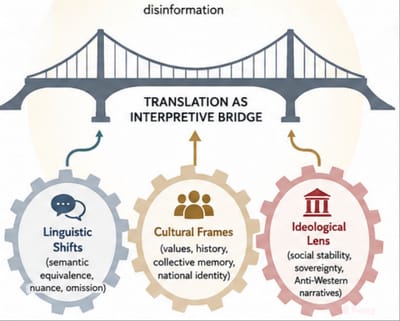
Yik Ching C. explores how the concept of “disinformation” changes as it travels across languages and cultures, showing how Chinese public discourse reinterprets political deception through local linguistic, cultural and historical frameworks rather than simply translating the English term.
Read MoreProject Blog
Please note: the views expressed in the individual blog posts are the authors' own, and do not necessarily reflect those of (Mis)Translating Deceit project members, other contributors, or affiliated partners.

Ray Morgan has written an insightful piece on Iran’s meme campaign, showing how AI-generated satire and “troll diplomacy” expose the conceptual limits of existing disinformation frameworks and challenge how we distinguish propaganda from public diplomacy.
Read More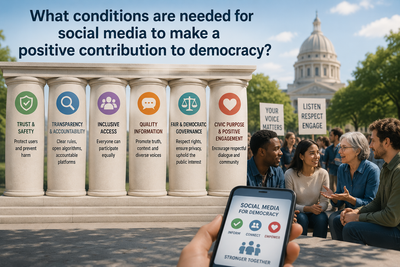
Nicolas Hénin has written a fantastic piece on how social media can better serve democracy by examining four key principles.
Read More
Ray Morgan has written an excellent piece on how the Rubio cable exposes the politics of defining disinformation, questioning who gets to label information operations as "disinformation" and who remains exempt from scrutiny.
Read More
Olga K. Nanova has written a fascinating piece on how Bulgaria's Share4Pay platform monetised and amplified disinformation through a network of fake news websites.
Read More
Hannah Gorlizki and Vera Tolz have written an insightful piece on how Soviet wartime propaganda deployed visual and textual strategies to undermine trust in Nazi mass communication.
Read More
Nicolas Hénin explores the rise of the zero-click internet, and its implications on an increasingly changing online information ecosystem.
Read More
Precious Chatterje-Doody and Maxime Audinet write for The Conversation on RT India and its role in the Kremlin's international outreach efforts.
Read More
Gosia Koroluk writes about the Polish media coverage of the 2025 Moldovan elections.
Read More
Nicolas Hénin provides a vulnerability study on Mauritania's information ecosystem, and provides solutions on how it can strengthen these vulnerabilities.
Read More