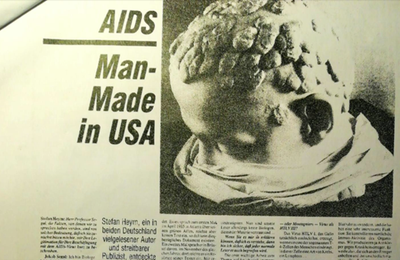
Maria Zhukova argues that the case study of disinformation around HIV-AIDS in the Soviet Union and the two Germanies in the 1980s offers integral analysis to how we visualise and analyse disinformation today.
Read MoreProject Blog
Please note: the views expressed in the individual blog posts are the authors' own, and do not necessarily reflect those of (Mis)Translating Deceit project members, other contributors, or affiliated partners.
In this report, we assess the extent, purpose, and impact of online Russia-sponsored news proxies in the context of the EU2024 elections.
Read More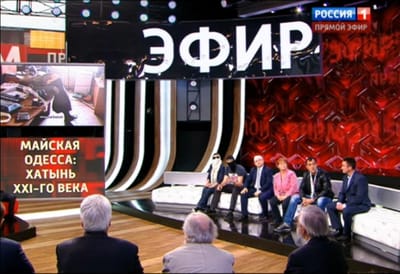
In the final part of his blog, Alexei Titkov builds upon his interrogation of studying Russian audiences' reactions to the 2014 Odesa Fire by using different media representations to challenge how shared knowledge is constructed in the Russian media environment.
Read More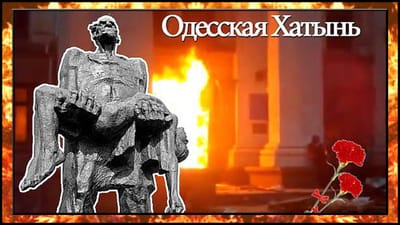
In Part One of this blog, Aleksei Titkov interrogates the propogandistic afterlives of the 2014 Odesa Fire, and the different tendencies Russian grassroots audiences use to respond to its invocations.
Read More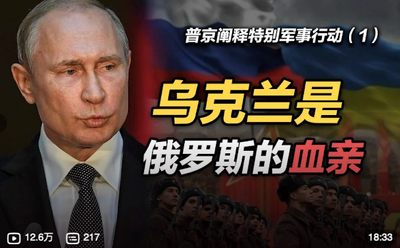
Sabrina's blog examines how citizens interact with official/un-official Russia-Ukraine war narratives in non-state media platforms, through the interactivity of amateur videos.
Read More
In this blog, Stephen Hutchings introduces some of the key ideas of his new open access article in the journal Cultural Studies.
Read More
The second part of a two-part blog post examining “sportswashing” as a form of disinformation, and reflecting on the role of audiences and the reception of “sportswashing” narratives.
Read More
The first part of Vitaly Kazakov's two-part blog post examining “sportswashing” as a form of disinformation, and reflecting on the role of audiences and the reception of “sportswashing” narratives.
Read More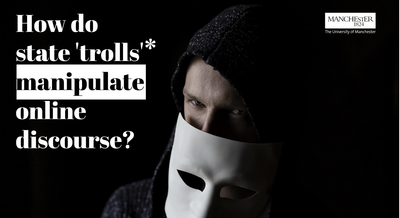
Maksim Markelov wins the third prize with the poster 'How do State Trolls Manipulate Online Discourse?'
Read More
Stephen Hutchings and Vera Tolz discuss our project in this video interview with Digital Futures network at the University of Manchester.
Read More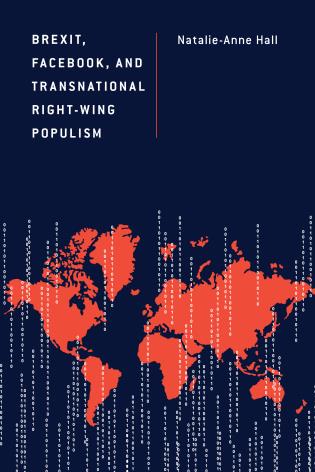
In her blog, Natalie-Anne Hall discusses the engagement of the pro-Brexit Facebook users with transnational right-wing populist discourses. The essay is based on Dr. Hall's recently published book 'Brexit, Facebook, and Transnational Right-Wing Populism' (Lexington Books, 2023).
Read More
This blog gives a handy overview of our project. It is published on 'The Russia Program' website at George Washington University and is available at: https://therussiaprogram.org/page37253323.html
Read More